Two Versions of Fishin' Frenzy: One's Licensed, One's a Trap
A mate messages you a video: someone's just pulled £12,000 from Fishin' Frenzy in three spins, and they want you to click their link to «try the same strategy». Another ad pops up on Instagram—looks like Martin Lewis, talks about a «secret Fishin' Frenzy loophole», and promises a guaranteed return. Both feel off, but you're not sure why.
Here's the split: Fishin' Frenzy itself—the Blueprint Gaming slot you'll find on UKGC-licensed sites—isn't a scam. The maths is published, the Return to Player sits at 96.12%, and you're playing a regulated product. The scam lives around it: fake apps, rigged clones, influencer partnerships that pay per sign-up, and edited win videos designed to make you deposit through an affiliate link. This breakdown shows you what's legitimate, what's fabricated, and how to spot the difference in under a minute.
The Real Game: What Blueprint Gaming Actually Built
Fishin' Frenzy is a five-reel, ten-payline slot developed by Blueprint Gaming, a studio owned by the Gauselmann Group and licensed by the UK Gambling Commission under remote supplier licence 39114. The game's been on the market since the early 2010s, and its popularity in British arcades and online casinos made it a household name—which is exactly why scammers clone it.
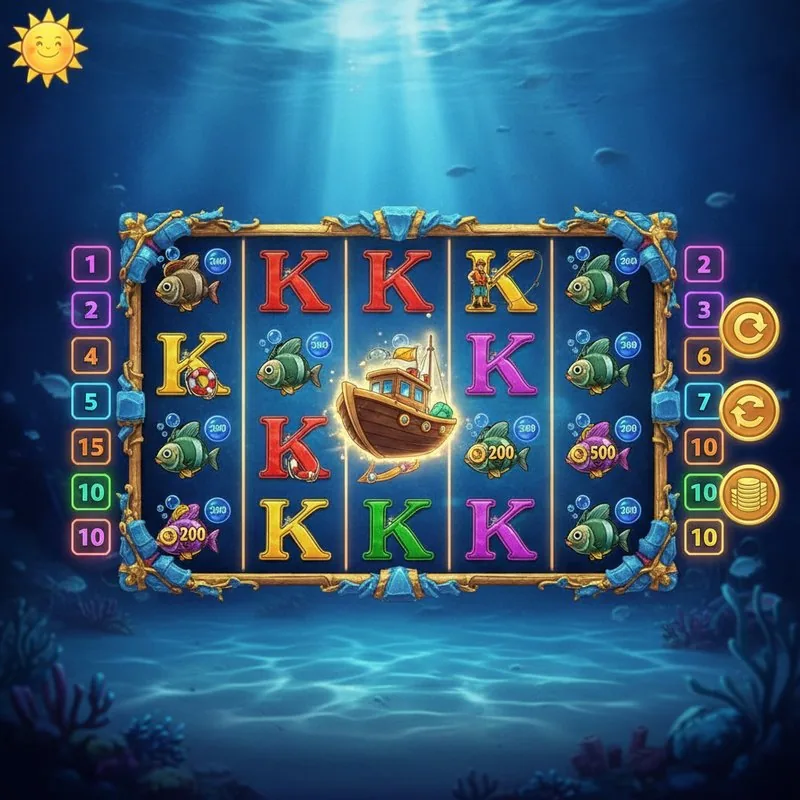
The maths is straightforward: 96.12% RTP, medium volatility, and a free-spins feature that triggers when you land three or more fisherman scatter symbols. During free spins, the fisherman collects the values of any fish symbols on the reels, and that's where the bigger wins sit. Maximum payout is capped at 5,000× your stake, so a £5.00 spin—the legal maximum under UKGC rules—could theoretically return £25,000. In practice, most sessions end in modest losses or small wins; the maths guarantees the house keeps 3.88% of all wagers over time.
You'll find the genuine game on sites that display a UKGC remote licence number in the footer—operators like Betfair Casino (licence 39575), William Hill (licence 39225), and Paddy Power (licence 38469). Every one of those licence numbers can be checked against the UKGC public register in seconds. If the site doesn't show a licence, or the number doesn't match the register, you're not playing the real game—and your deposit isn't protected by UK gambling law.
The Fake Ecosystem: Where the Scam Actually Lives
The scam isn't the slot's maths—it's the infrastructure built around the game's name. Fake apps, rigged browser clones, and AI-generated celebrity endorsements exist purely to harvest deposits and personal data. Here's what the scam looks like in practice:
- Fake mobile apps: APK files and unlisted iOS apps that mimic the Fishin' Frenzy interface but run on manipulated RNG code. You deposit real money, the reels spin, but the outcomes are server-controlled to drain your balance. No UKGC licence, no recourse.
- Deepfake ads: video clips of Martin Lewis, Holly Willoughby, or Ant and Dec apparently endorsing a «Fishin' Frenzy strategy» or «loophole». The audio is AI-generated, the footage is stitched from legitimate broadcasts, and the link leads to an unlicensed casino registered in Curaçao or Costa Rica.
- Edited win videos: TikTok and YouTube clips showing six-figure payouts from Fishin' Frenzy—except the win counter is overlaid in post-production, or the footage is from a demo account where the RNG has been replaced with a scripted sequence. The goal is to drive traffic through an affiliate link; the creator earns £50–£200 per qualifying deposit.
- Clone sites: browser-based «casinos» that use the Fishin' Frenzy name and artwork but run on pirated or reverse-engineered code. The RTP might be 85% instead of 96.12%, and your withdrawal requests are ignored or endlessly delayed by «verification» requests.
The common thread: none of these operations hold a UKGC licence, and none are subject to affordability checks, stake caps, or GAMSTOP self-exclusion. If you've deposited on an unlicensed site, your bank may refuse a chargeback because gambling transactions fall outside consumer protection rules when the merchant isn't UK-regulated.
How to Spot the Real Game in Under 60 Seconds
Distinguishing a licensed operator from a scam site doesn't require forensic analysis—just three checks that take less than a minute combined:
- Footer licence: scroll to the bottom of the page. Every UKGC-licensed site must display its remote licence number, usually in a format like «Licensed and regulated by the UK Gambling Commission, licence 39225». Copy the number and paste it into the UKGC public register search at gamblingcommission.gov.uk. If the licence doesn't exist, or the operator name doesn't match, leave immediately.
- Payment methods: licensed UK sites accept debit cards, PayPal, Apple Pay, and Open Banking transfers, but never credit cards—those have been banned for gambling since 2020. If the deposit page offers Visa credit or asks for cryptocurrency, it's not compliant.
- Stake cap enforcement: try to set a spin value above £5.00. If the game allows it, you're either on an unlicensed site or the operator hasn't implemented age-gated stake limits (£2.00 maximum for players aged 18–24). Either scenario is a red flag.
If all three checks pass, you're playing the legitimate Blueprint Gaming slot under UKGC supervision. If even one fails, you're on a scam site, and anything you deposit is at risk.
The Hype Trap: What Happens to Your Bankroll
Let's assume you've found a licensed site and you're playing the genuine game. The maths still isn't in your favour. Fishin' Frenzy's 96.12% RTP means the house keeps £3.88 from every £100 wagered, on average, across millions of spins. Your individual session can swing wildly—medium volatility means you'll see stretches of twenty or thirty dead spins between features—but the long-term edge is unbreakable.
A common scenario: you deposit £50.00, set your stake to £1.00, and burn through 30 spins without triggering the free-spins feature. You're down to £20.00 when the fisherman finally lands. The feature awards eight free spins and collects £18.00 worth of fish symbols—you're back to £38.00. Another 25 spins, no feature, balance hits £13.00. You chase with a £5.00 spin, lose, deposit another £50.00. By the end of the session, you've wagered £200.00 and cashed out £35.00. The 16.5% loss isn't bad luck—it's volatility around the expected return.
Bonuses don't change this. A £20.00 no-wager free bet is rare; most casino bonuses come with 30× to 40× wagering requirements. A £10.00 bonus with 35× turnover means you must wager £350.00 before you can withdraw. If you're playing Fishin' Frenzy at £1.00 per spin, that's 350 spins, and the house edge takes its cut on every one. First-time withdrawal processing adds 24–48 hours for KYC document checks, so you'll wait longer than advertised even after clearing the wagering.
| Deposit | Stake | Spins | Expected Loss (3.88%) | Likely Range | |
|---|---|---|---|---|---|
| £20.00 | £0.50 | 40 | £0.78 | £5.00 loss to £3.00 profit | → |
| £50.00 | £1.00 | 50 | £1.94 | £15.00 loss to £8.00 profit | → |
| £100.00 | £2.00 | 50 | £3.88 | £30.00 loss to £12.00 profit | → |
The hype around Fishin' Frenzy—influencer videos, affiliate «big win» compilations, streamer partnerships—exists to drive deposits. The maths hasn't changed since the game launched, and no strategy or betting pattern alters the RTP. If you're playing for entertainment and can afford the £50.00 or £100.00 loss, the game works as designed. If you're chasing losses or depositing money you need for rent, the outcome is predictable.
Staying Legal and in Control
UK gambling law makes three things mandatory: you must be 18 or over to play, operators must offer deposit and loss limits, and you have the right to self-exclude through GAMSTOP for six months to five years. Every UKGC-licensed site is required to link to GAMSTOP in the responsible gambling section, and registration blocks access to every licensed operator in the country.
Affordability checks start at £150.00 net deposits per month. The operator will run a soft credit check using data from credit-reference agencies; if your deposit pattern suggests financial stress, they'll ask for income proof or restrict your account. This isn't harassment—it's a UKGC requirement introduced to reduce gambling harm. If you find the checks intrusive, that's a signal to reassess your play.
Stake caps are automatic: £5.00 maximum per spin for all players, and £2.00 if you're aged 18–24. The age gate is enforced during account creation, so you won't be able to bypass it once verified. Withdrawals go out via Faster Payments (same day to two working days), e-wallets (a few hours to 24 hours), or back to your debit card (one to three working days). Your first withdrawal always takes longer—24 to 48 hours for document checks is standard. Winnings are tax-free; operators pay the Remote Gaming Duty, which rises to 40% from April, but that's their cost, not yours.
If you're struggling to control your play, BeGambleAware offers free support, and the National Gambling Helpline (0808 8020 133) is open 24 hours. The moment gambling stops being entertainment—when you're depositing money you can't afford to lose, chasing losses, or hiding play from family—self-exclusion through GAMSTOP is the safest move.
FAQ
Is Fishin' Frenzy itself a scam, or just the fake versions?
The genuine Blueprint Gaming slot isn't a scam—it's a licensed, regulated game with published RTP (96.12%) and transparent maths. The scam lives around it: fake apps, unlicensed clone sites, deepfake celebrity ads, and rigged browser versions. If you're playing on a UKGC-licensed site, the game is legitimate. If the site has no UKGC licence number in the footer, you're on a scam platform.
How do I verify I'm playing the real game and not a clone?
Three checks: one, scroll to the site footer and find the UKGC remote licence number, then verify it on the Gambling Commission's public register. Two, check the payment methods—licensed UK sites never accept credit cards (banned since 2020). Three, try to set a spin above £5.00; if the game allows it, the site isn't enforcing UK stake caps and isn't compliant.
Can I play Fishin' Frenzy legally in the UK, and where?
Yes, but only on operators licensed by the UK Gambling Commission. Examples include Betfair Casino (licence 39575), William Hill (licence 39225), and Paddy Power (licence 38469). You must be 18 or over, pass age and identity verification, and use a payment method in your own name. Demo play is available on most licensed sites, but you'll need an age-verified account to access it.
Why do so many fake Fishin' Frenzy ads use celebrity faces?
Deepfake technology allows scammers to generate video clips of Martin Lewis, Holly Willoughby, or other trusted figures apparently endorsing a gambling «strategy» or «loophole». The footage is stolen from legitimate broadcasts, the audio is AI-generated, and the goal is to lend credibility to an unlicensed casino link. No UK celebrity legally endorses online gambling—if you see one in an ad, it's fabricated.